


Should You Hire a Doula? Here’s What I Wish I had Known
- Vraja Varuni Devi Dasi
- Feb 27, 2025
- 7 min read

"When I had my first baby, I didn’t fully understand the role of a doula. Like many new mothers, I assumed my husband and I could handle everything on our own. Looking back now, I wish I had known then what I know now about the incredible support a doula provides.”

My Experience as a New Mum
During my pregnancy with my eldest daughter I was, like many new mothers, quite naive, and full of optimism for everything that was ahead of me. I spent a lot of my pregnancy focusing on which pram would be the perfect one to push our little girl around in.
I decided early into the pregnancy that I wanted to try for a home birth.
By nature I am a fairly private person, I like being in my own space and getting on with things without wanting too much attention. The thought of being at a hospital giving birth with so many people around me, under the bright lights of a hospital ward, at a time when I knew that I would feel vulnerable and want to retreat into myself didn’t sit right with me. I knew that I would feel more comfortable being in my own space.
My community midwife was wonderful. I was a 27 year old girl, and she was around my mothers age, so she cared for me with the compassion and empathy that anyone in a motherly role like her should do. She listened to my choice to have a home birth and supported me in it. I wish it had been as simple as that. Towards the end of that pregnancy, my midwife changed teams and from then on I would see different midwives at almost every appointment. At the time, I didn’t understand the importance of continuity of care, and how it can impact the outcome of your birth.
The average caseload for a UK community midwife varies depending on the model of care and specific service demands. In traditional shared care models, midwives often manage caseloads ranging from 100 to 150 women. A survey conducted of 213 UK based community midwives reported an average caseload of 154 women, with 57% of respondents experiencing high or very high stress levels, and many expressing concerns about providing suboptimal care due to these demands.
In contrast, caseload midwifery models typically assign midwives to 35–40 annually which can provide a higher level of continuity of care, however the National Institute for Health and Care Excellence (NICE) has highlighted that community midwives often handle caseloads exceeding recommended levels, leading to increased stress and potential impacts on care quality.
During my first pregnancy, I trusted the care that I was being given. I had certain personal desires that helped me avoid falling too easily into too many unnecessary interventions, and I went into labour naturally at 41 weeks, however my naivety and trust in my care provider played a role in what led me to not always having my choices heard and ending up in having the complete opposite of the birth experience that I had wanted. I didn’t realise how easily my choices and my voice could be overlooked, how quickly the power could be taken away from me.
“My husband is my rock. I lean on him for everything, he makes me feel safe, secure and like I can get through anything with him by my side. So when it came to birth I didn’t think that I needed anyone else with me. Looking back now, what I overlooked was the fact that, as wonderful and supportive as he is, he had never experienced supporting someone through labour and birth before. This was new territory for the both of us.”
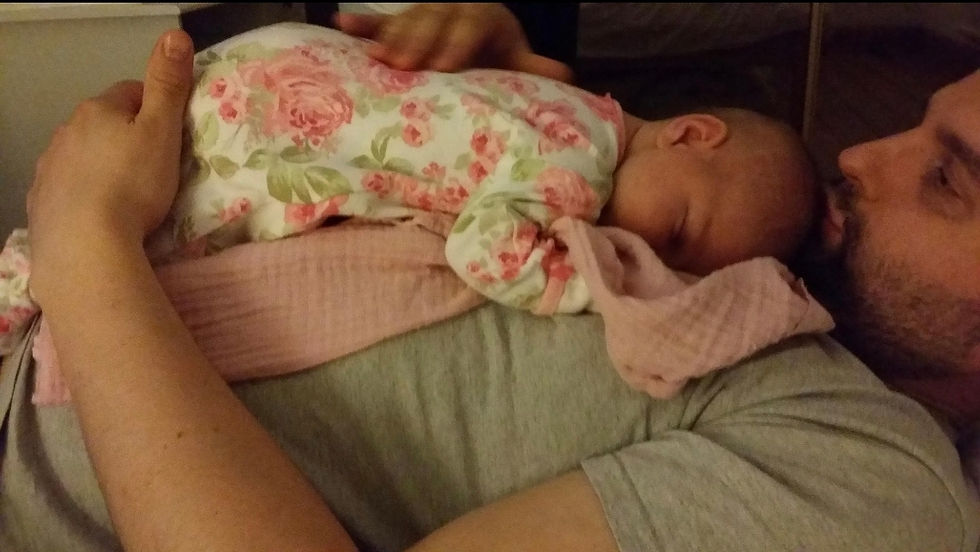
I hadn't thought of it at the time, but while my husband obviously wanted to do whatever he could to support me, expecting him to know what to do in the instance of seeing me at my most vulnerable, and having to cope and advocate for me when he himself was probably feeling lost in it all, was a lot of pressure to put on him.
I also placed a lot of my trust in the fact that I had midwifery care provided by the NHS, and as far as I knew for most women that seemed like enough. Midwives are highly trained in supporting pregnancy and birth, and I have had some incredible midwives over my three pregnancies, still I came to learn that their hands are often tied by protocols, time constraints, and also that from one appointment to the next my midwife could change which can lead to inconsistencies. Trusting and agreeing to what I was told by my care providers at times led me into situations that made me feel anxious. There were times, especially during my pandemic pregnancy, where I had to speak up against qualified medical experts to avoid procedures that were completely against my wishes or needs, and was later proved to be unnecessary (more on that in a future blog!).
What I Wish I had know about Doulas
Unfortunately, there really wasn’t a lot that knew about doulas at the time when I was having my babies. In the South Wales area compared to other parts of the UK doulas are still fairly few and far between and therefore pretty niche. Even now, a few years on, in the Swansea, Gower area where I live there is currently only myself and one other doula within our postcode area. However, year on year, the number of doula supported births in the UK is increasing.
In 2022, doulas registered with Doula UK assisted in over 2,000 births, up from 1,835 in the previous year, indicating a growing trend of expectant mothers seeking doula support.
I wish that I had looked into doula care during my pregnancies, but I didn’t know anyone that had used a doula and had no idea of the benefits. I’m sure now that each of the birth experiences that I had would have been different, less chaotic, stories to tell if I had had doula support.
Some of the interesting points about doulas that you might not know;
Doulas Provide Continuity of Care - While doulas are not medically trained, what we do provide is continuity of care for families going through the system.
Doulas Are for Everyone – Many people assume doulas are only for unmedicated or home births, but we support all birth choices, including hospital births, C-sections, and epidurals.
We Support Partners Too – Doulas don’t replace partners; we work with them! We help partners feel confident and involved rather than overwhelmed.
Emotional and Physical Support Makes a Huge Difference – Having a trained professional to provide reassurance, comfort measures, and advocacy reduces stress and increases satisfaction with the birth experience.
Doulas Improve Birth Outcomes – Studies show that having a doula can shorten labour, reduce interventions, and lead to more positive birth experiences.
Postpartum Support is a Game-Changer – The care doesn’t stop at birth! Many doulas offer postpartum services to help with newborn care, feeding, and emotional recovery.
You Deserve a Voice in Your Birth – Birth can feel overwhelming, but a doula helps ensure you understand your choices and feel empowered every step of the way.
Why I Became A Doula
After having my first baby I felt so blessed to have the wonderful support of my husband and family. It was such a blissful time made easier by the fact that I was well nourished with home cooked meals, I was well rested, I had regular herbal baths to aid healing, and felt held and supported in my family unit. I knew then that I wanted to one day support other mothers on their postpartum journey. I knew that not all mothers would be in the position to have the kind of support that I received, however I didn’t know if a job like that existed. The more that I looked into over the years, I realised that that was part of the role of a doula.
When the time was right as my youngest daughter turned three, I enrolled onto a training course with Nurturing Birth, as well as other various courses to support me on the path to becoming a doula. It was in doing this course that really solidified in my mind the importance of not only postpartum doula care, but also pregnancy and birth support. I came to realise what a difference having a doula could have made to my birth stories.
Why You Should Consider Hiring a Doula
At a time when you and your birth partner may not understand the choices being presented to you, and what your rights are, doulas can provide you with relevant information to have clarity around your decisions. Being informed can support you in navigating how to speak to your midwives or consultants to get the best out of your care.
The statistics around the benefits of doula care during the perinatal period are extremely positive. While specific UK-based statistics on the impact of doula support on cesarean section rates are limited, evidence from international studies suggests that continuous support from a doula during labour can significantly reduce the likelihood of cesarean births. For instance, research indicates that women with doula support have a cesarean rate of 12.5% compared to 58.8% in the control group during induced labour.
A survey by the Care Quality Commission (CQC) involving nearly 19,000 women revealed that over one-third of pregnant women in England did not consistently receive necessary assistance from maternity staff during labour or childbirth, and almost half faced similar issues post-birth. This highlights the critical role doulas can play in providing continuous and personalized support.
Choosing a doula is about more than just having extra support during birth—it’s about feeling empowered, informed, and truly cared for throughout your journey. Whether you’re hoping for a natural birth, planning a caesarean, or navigating the unpredictability of labour, a doula provides continuous reassurance, advocacy, and emotional support tailored to your needs. With proven benefits, from reducing intervention rates to improving overall birth satisfaction, having a doula by your side can make all the difference.
If you’re curious about how a doula could support you, why not reach out for a chat?
Your birth experience matters, and you deserve to feel confident and supported every step of the way.
Comments